
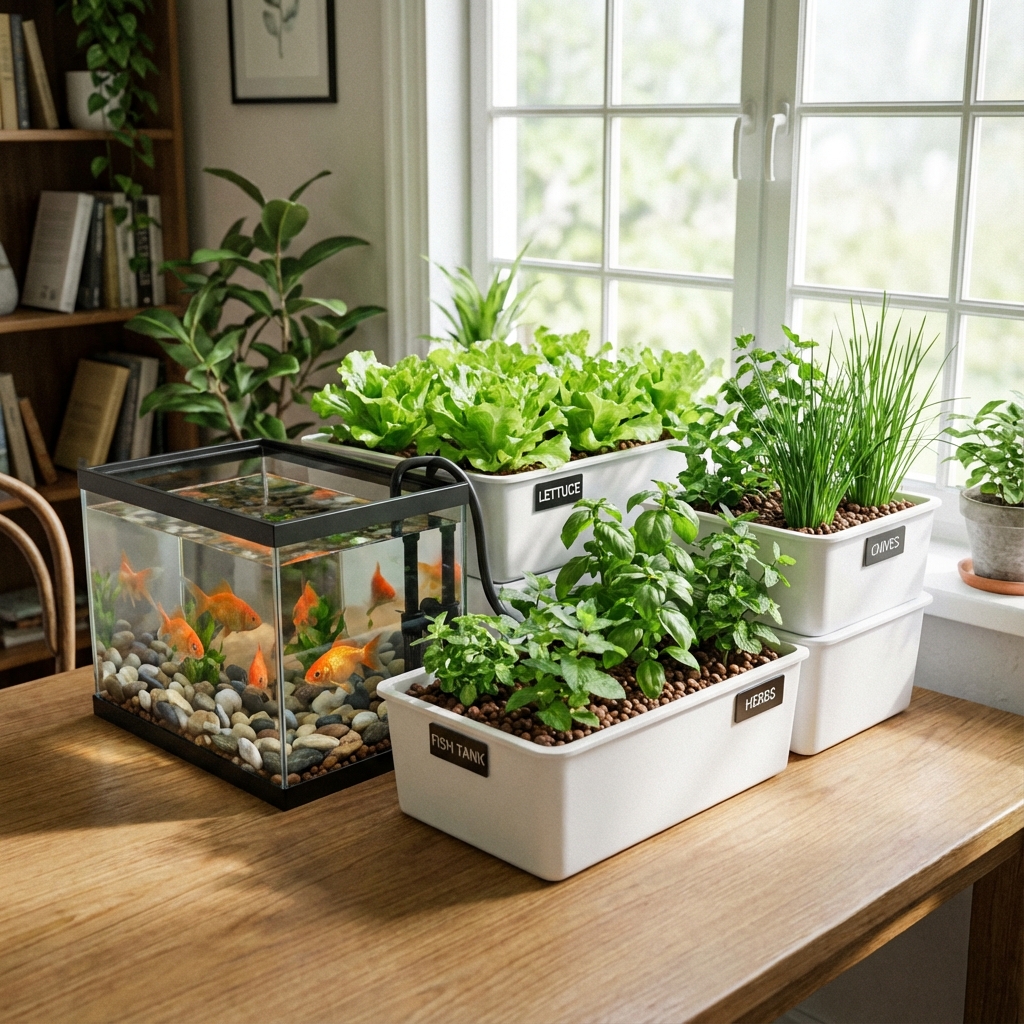
Understanding Aquaponics: The Basics
Aquaponics is a food production system that combines aquaculture (raising fish) with hydroponics (growing plants in water without soil). In this symbiotic environment, fish provide nutrients for plants through their waste, while plants purify the water for the fish.
The concept isn't new—ancient civilizations including the Aztecs practiced a form of aquaponics using floating gardens called chinampas. Modern aquaponics has refined these principles using contemporary technology.
How Does Aquaponics Work?
The aquaponics cycle involves three main organisms working together:
- Fish — produce waste (ammonia) as a byproduct of their metabolism
- Beneficial bacteria — convert ammonia into nitrites, then nitrates (plant food)
- Plants — absorb nitrates as fertilizer, filtering and cleaning the water
According to the USDA Agricultural Research Service, recirculating aquaculture systems like aquaponics represent a sustainable approach to food production.
Benefits of Aquaponics
Water Conservation
Aquaponic systems use up to 90% less water than conventional soil-based agriculture. Research from University of Arizona Cooperative Extension confirms these systems are ideal for water-scarce regions.
No Soil Required
Since plants grow in water, you can set up an aquaponics system anywhere—indoors, on rooftops, in urban areas, or in regions with poor soil quality.
Organic Production
The system naturally eliminates the need for synthetic fertilizers and most pesticides.
Faster Growth & Higher Yields
Plants in aquaponic systems typically grow 25-50% faster than in soil, with some growers reporting up to twice the growth rate.
Types of Aquaponics Systems
1. Media-Based (Flood and Drain)
The most common system for beginners. Plants grow in a media-filled bed that periodically floods then drains.
2. Deep Water Culture (DWC)
Plants float on rafts with roots dangling directly in nutrient-rich water.
3. Nutrient Film Technique (NFT)
A thin film of water continuously flows through channels, keeping plant roots moist.
Getting Started
Ready to dive in? Here's what you'll need:
- Fish tank — Minimum 20 gallons for beginners
- Grow bed — Food-safe container with growing media
- Water pump and Air pump
- Growing media — Clay pebbles or lava rock
- Test kit — To monitor water quality
For a complete walkthrough, see our How to Build a DIY Aquaponics System guide.


