The Rule That Filters Every Species
Texas A&M AgriLife Extension's species-selection guide ranks the common aquaculture fish from "poor" to "excellent" for aquaponics, and its ideal-species test is a single sentence: can the fish reach market size in less than a year, before it starts breeding? Slow growers fail that test even when they are hardy and tasty. Bluegill, for example, takes 2 to 2.5 years or more to reach a single pound and needs 3.5-4.4 pounds of feed per pound of gain, which is why Extension rates it "fair" despite its reputation as excellent table fare. Sunfish and largemouth bass carry another hurdle: in some states, Texas included, they are illegal to sell as food fish — worth checking if you are growing dinner rather than keeping pets.
And before the species list: forget the ocean. Marine and brackish fish — red drum, cobia, flounder, pompano — are flatly "unacceptable" in Extension's ranking, because they need salinities around 5 parts per thousand while most vegetables and herbs die at salinity levels as low as 1 ppm. Aquaponics is a freshwater system, full stop.
Three Questions Before You Pick a Species
New growers usually choose fish by taste or colour. Extension specialists choose by temperature: New Mexico State University's aquaponics guide sorts the candidate species into warmwater fish — goldfish, bass, bluegill, catfish and tilapia, which prefer 65-85°F — and coldwater fish such as trout, which thrive at 55-65°F. Your water, not your menu, makes the first decision.
Second: do you want food or filters? Some growers keep ornamental goldfish purely as nutrient factories for their plants, NMSU notes, and never eat a thing the system produces. Third: is the species legal where you live? Tilapia and carp are not native to most of the United States, and states regulate them because they can establish themselves in the wild (more on that below).
The Five Fish Worth Keeping
1. Tilapia — the default for warm water
Best for: warm water, an edible harvest, forgiving beginners
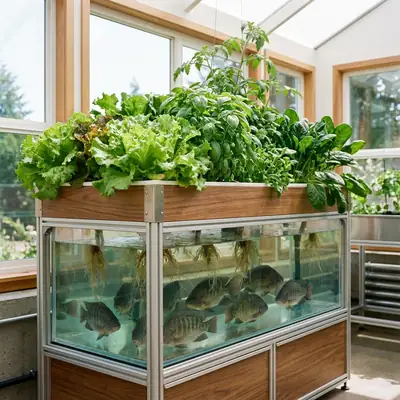
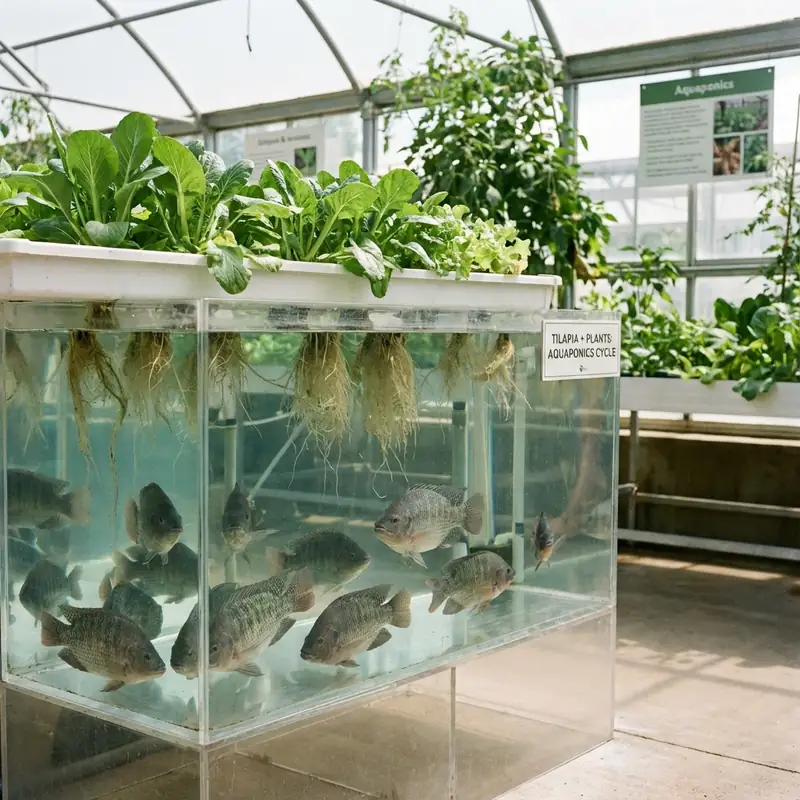
Tilapia is "the most common species grown in both home and commercial aquaponic systems," NMSU Extension writes, because it grows well in recirculating systems and tolerates crowding and fluctuating water conditions that would stress other fish. They are also unusually tolerant of low oxygen — though tolerant is not thriving: at low levels they hang at the surface gasping and growth suffers, so the recommendation is to keep dissolved oxygen at 5 ppm or higher regardless.
- Survivable range: 65-85°F; maximum growth at 81-85°F
- Below 70°F growth slows dramatically, reproduction stops and disease becomes more likely; fish die below 50°F
- Keep nitrite at or below 1 ppm — tilapia are sensitive to it
- pH: tilapia themselves handle 5.0-10.0, but your plants and bacteria do not — see the compromise below
One caveat for temperate growers: heating water to the low-80s is what makes tilapia fast, and in a cool climate the heater bill is the real cost of this default choice. If you cannot hold at least 70°F, pick a different species rather than fighting the fish.
2. Goldfish — the beginner's workhorse
Best for: beginners, ornamental systems, places where tilapia are restricted
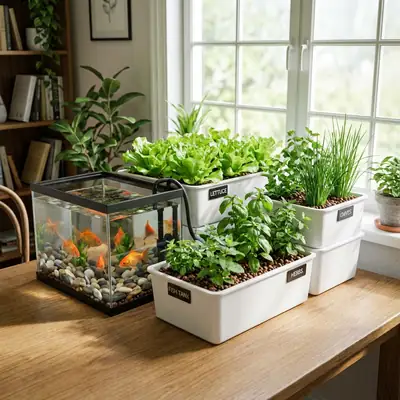
Goldfish are warmwater fish — hardy across the same broad 65-85°F band as tilapia, per NMSU — and they produce plenty of waste to feed your plants. NMSU lists ornamental goldfish as the classic alternative for growers who are primarily interested in the plants, or who live where non-native tilapia cannot be kept. They are not a food fish; think of them as the engine room of the system.
The economics are blunt: Texas A&M puts six months of feed for a comet goldfish at 28-33 cents, while the same fish retails for 16-31 cents — you literally pay more to feed it than it is ever worth. That is fine when the fish is machinery for lettuce, and it is exactly why Extension calls the common myth that "aquaponics is cheaper than hydroponics" a myth: a hydroponic setup needs fewer pumps, filters and tanks and no fish feed at all. If you would never sell or eat the fish, that is the honest comparison to make before buying a tank.
3. Koi — the show fish with carp stamina
Best for: large outdoor systems, long-term ornamental value
Koi are the brightly coloured ornamental form of the common carp, a species humans have farmed for about 2,500 years; the US Geological Survey describes them as a domesticated variety kept as pets and show fish, capable of living a long time. Common carp appear on NMSU's list of species well adapted to recirculating systems. They are also tough customers: Texas A&M reports koi surviving 32-95°F (ideal 65-75°F) and pH 5-9, doing well on a low-protein 28-32% diet, and converting feed at 1.8-2.4 pounds per pound of gain — and unlike goldfish, a finished 1-3 pound koi can sell for $20-65 to pond buyers. Two things to know: koi get big and want space, and carp are so successful outside ponds — the USGS calls the common carp the third most frequently introduced species in the world — that many jurisdictions regulate them. Never release koi or goldfish into local waterways.
4. Rainbow trout — the cold-water specialist
Best for: cold climates, cold well water, gourmet harvest
Trout are the other end of the thermometer: coldwater fish that NMSU puts at 55-65°F, where tilapia would sulk or die. The price is oxygen. Warmwater fish like bass, bluegill and catfish get by on about 5 ppm dissolved oxygen; trout need about 6.5 ppm to maintain good health and maximum growth, so budget for more aeration than a tilapia system needs. Trout are the reason greenhouse growers in cool regions can run an aquaponics system at all without heating water to tropical temperatures.
5. Channel catfish — the low-drama bottom feeder
Best for: warm climates, growers who want firm white fillets
Mississippi State University Extension's biology profile puts the channel catfish's optimum growth window at 75-85°F — they survive from just above freezing to nearly 100°F, but grow slowly below 65°F and stop feeding below about 50°F. They are bottom-dwelling opportunistic omnivores, relatively hardy, and tolerate crowding. A practical bonus for home systems: catfish "usually do not reproduce in culture ponds," MSU notes, which means your stocking numbers stay under your control instead of exploding. Their firm, mild white flesh is why they anchor the US commercial aquaculture industry.
Expect patience, though. Texas A&M's tank assessment is that catfish grow more slowly indoors than in ponds and can take up to 18 months to reach marketable size; males become territorial and start fighting at 0.25-0.5 pound; and disease pressure rises in tanks, which stings because most aquaponic systems cannot practically medicate the water — good water quality is the only medicine. For a first system they are still a solid food fish; they are simply not the fast lane.
Matching Fish to Your Water Temperature
| Water temperature | Recommended fish |
|---|---|
| Coldwater (55-65°F) | Rainbow trout, Arctic char, perch |
| Warm water (65-75°F) | Goldfish, koi, bluegill, bass |
| Warm water, heated (75-85°F) | Tilapia (fastest at 81-85°F), channel catfish (fastest at 75-85°F) |
Perch, Arctic char and bass may look unfamiliar on the list, but they all come straight from NMSU's roster of species "well adapted to growing in recirculating aquaculture systems," along with the five above.
If you want the same comparison in numbers, Texas A&M's ranking adds the production side for the species it rates "excellent" through "fair":
| Species | Months to market | Feed per lb of fish | Temperature notes |
|---|---|---|---|
| Tilapia | 6-8 (up to two crops a year) | 1.3-1.8 lb | Stop feeding below 63°F; blue tilapia tolerate 48°F, Mozambique begin to die below 54°F |
| Koi | Variable (sell at 1-3 lb) | 1.8-2.4 lb | Survive 32-95°F; ideal 65-75°F |
| Hybrid striped bass | 12-14 | 2.5-2.8 lb | Tolerate 39-92°F; ideal 73-81°F; cannot breed, so buy fingerlings each cycle |
| Channel catfish | Up to 18 in tanks | 1.5-1.8 lb | Optimum 75-85°F (MSU); males fight above 0.25-0.5 lb |
| Bluegill / sunfish | 24-30 | 3.5-4.4 lb | Illegal to sell as food fish in some states |
The feed figures are feed-conversion ratios from the Texas A&M Extension guide, and the ranking itself is written for small commercial operations in Texas — a species that is a poor business can still be a very good home aquarium, which is exactly how goldfish land on this page.
The Compromise Nobody Warns You About
Your system has three clients with three different preferences, and the number you run at has to be livable for all of them — fish, plants and the nitrifying bacteria in your biofilter. NMSU's water-quality circular gives the working numbers:
- Temperature: vegetables grow best at 70-75°F while the biofilter performs optimally at 77-86°F — comfortably overlapping, but a reason not to run tropical fish at 85°F with a salad crop unless you accept slower lettuce.
- pH: tilapia tolerate 5.0-10.0, plants grow best below 6.5, and nitrifying bacteria work best above 7.5 and stall below 6.0. NMSU's optimal compromise for all three is 6.8-7.0, with anything from 6.4 to 7.4 tolerable — chasing the narrow window causes what the circular calls "unnecessary adjusting and tweaking."
- Oxygen: keep dissolved oxygen at 5 ppm or higher (6.5 ppm for trout); warm water holds less oxygen, so the tropical end of the range needs the most aeration.
Cycling comes first
Whatever fish you choose, they go into a cycled system, not a new one. NMSU puts fish-in cycling at 4-6 weeks for the bacterial colonies to establish, and lays out fishless cycling as the faster alternative with two stated advantages: no fish at risk while the biofilter matures, and 10 days to 3 weeks instead of 4-6. If you have not cycled yet, start with our build guide and hold the fish order for a month.
Check the Rules Before You Buy
The species that thrive in your system can thrive outside it, and regulators know that. NMSU flags this plainly for tilapia: it is a non-native species, and in New Mexico anyone importing or culturing tilapia — or any exotic species — must file an application with the state Department of Game and Fish first. Other states go further: some ban tilapia outright and several restrict goldfish and carp for the same reason. Before ordering fingerlings, search "[your state] aquaculture permit" or call your cooperative extension office; it is a five-minute check that saves you from having to give your fish away.
Decide What the Fish Are For
If the goal is groceries, pick a food fish your water temperature supports and that your patience matches: tilapia in the 80s are the fast lane — Extension rates them "excellent," with market size in 6-8 months — while catfish reward a year and a half of feeding. If the goal is leafy greens with minimal fuss, goldfish or koi do the job and never demand a fillet knife — just remember that with goldfish the feed costs more than the fish is worth, which is fine for machinery and foolish for a crop. Texas A&M puts it plainly: if you will never use the fish, run a hydroponic system instead. If you would rather skip the fish side of the bargain entirely, the passive Kratky method grows the same salads without a tank.
New to the whole loop? Read What is Aquaponics first, then plan the plant side with what to plant in aquaponics.