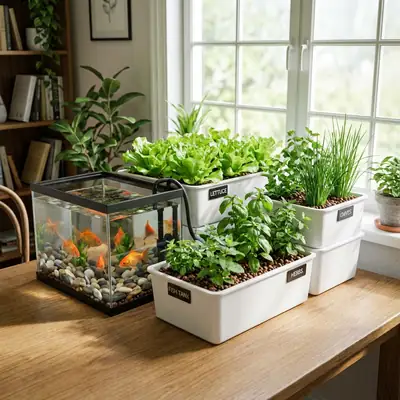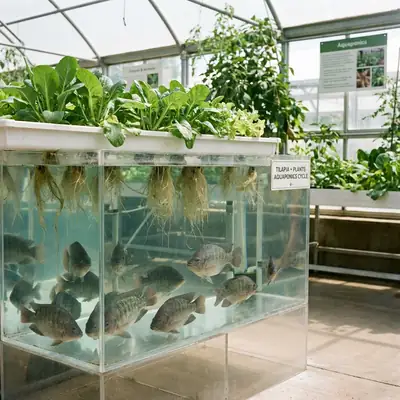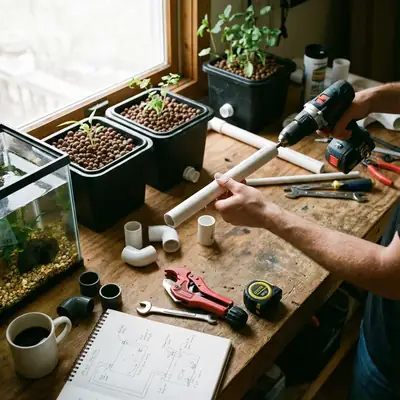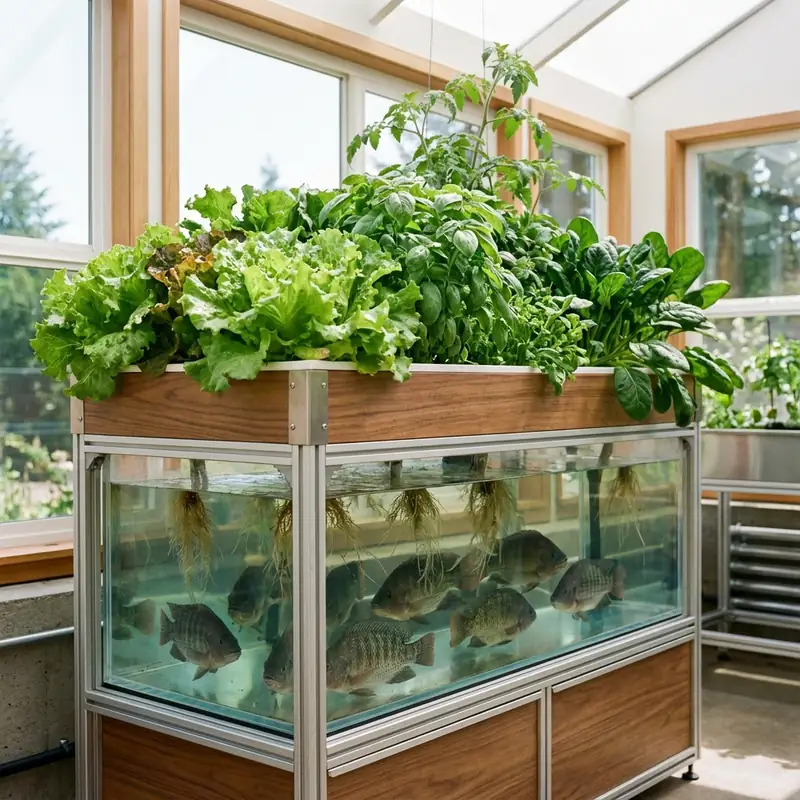
Choose the Right First Crop
The FAO manual on small-scale aquaponic food production (Somerville et al., 2014) is the standard reference for beginner growers, and its advice on the plant side is simple: start with fast-growing, robust plants that have a low nutrient demand. In practice that means leafy green vegetables such as salads, or nitrogen-fixing plants such as beans and peas. Larger fruiting vegetables, which need far more nutrients, should wait until the system is 2-3 months old and its nutrient base has built up.
Timing matters as much as crop choice. Seedlings can go into a brand-new system as soon as nitrates are detected in the water, but expect them to grow slowly and show temporary deficiencies, because there is barely any nutrient in the water yet. The FAO recommends waiting 3-4 weeks for nutrients to accrue. In general, aquaponic systems grow slightly slower than soil or hydroponics for the first six weeks — then, once the nutrient base is established (1-3 months), plant growth rates become 2-3 times faster than in soil.
A slow first month is normal
If your first lettuce crawl sulk for six weeks, you have not done anything wrong. The bacterial workforce, the fish and the nutrient reserves are still building. Plant a few extras as a hedge, keep feeding the fish lightly, and judge the system from week six onward.
Step 1: Raise Seedlings in a Nursery
Healthy, strong seedlings decide half your harvest, so the FAO recommends a simple plant nursery rather than direct sowing everything. Polystyrene propagation trays — or recycled egg cartons — sit in a shallow bed filled with an inert medium: rockwool, peat, coco fibre, vermiculite, perlite or a soilless potting mix. A lined nursery bed watered for about half an hour a day on an electric timer keeps the media moist without waterlogging the seedlings, which invites fungal problems.
Sow and raise the seeds in seven steps:
- Fill trays with growing media such as compost or coco fibre.
- Sow seeds in holes about 0.5 cm (~¼ in) deep and cover loosely, without compacting.
- Keep the tray shaded and watered until germination.
- Once the first leaves appear, harden the seedlings off by introducing them to stronger sunlight for a few hours a day.
- Optionally feed once a week with a gentle organic fertiliser high in phosphorus to build roots.
- Keep seedlings growing for at least two weeks after the first leaves appear so the roots develop properly.
- Transplant when plants are strong, releasing them from the tray with a small blunt tool and keeping the plug intact.
You can also sow directly into a media bed. If the bed floods and drains (for example on a bell siphon), remove the siphon while you sow so the seeds are not washed around, and put it back when the first leaves appear.
What you should not do is bring in seedlings grown in soil. All the soil has to be washed very gently from the roots, because it can carry plant pathogens, and the wash is so stressful that you can lose 4-5 days of growth. Starting from inert media avoids the problem entirely. Whichever way you plant, do it at dusk: roots are sensitive to direct sun, and a night to settle before the morning sun dramatically reduces transplant shock.
Step 2: Plant Into Your System Type
Media beds (flood and drain)
Push the gravel aside, dig a hole big enough for the plant, set the seedling in and backfill. Plant at the highest point of the flood line — about 5-7 cm (2-3 in) below the media surface — so the roots sit partly in the standing water. Don't plant deeply: water touching the stem or leaves invites collar rot.
NFT channels
Support the seedling in a net cup holding 3-4 cm (~1.5 in) of gravel, and fill the rest of the cup with a gravel-and-compost or coco-fibre mix. The moisture-retaining medium matters at first, because young roots only barely touch the thin film flowing along the pipe. After about a week the roots should have grown out of the net cup and into the flow; if they have not, run a wick from the bottom of the cup into the stream.
Deep water culture (DWC)
Same support as NFT — a net cup with 3-4 cm of inert medium — then set it into a hole in the floating raft so the bottom of the cup just touches the water surface.
Spacing and Staggered Planting
Aquaponic plants can be spaced slightly closer than in soil, because they never compete for water and nutrients — but they still compete for light, so leave room for each plant's mature size or quality drops. Two working numbers from the FAO's sizing example: about 25 lettuce heads per square metre (~11 ft²), and 4 weeks from transplant to harvest for lettuce. Shade-tolerant crops can share a bed with taller plants.
Stagger your plantings instead of harvesting everything at once. One mass harvest pulls the nutrient level down just before picking and lets it spike afterwards — which stresses the fish. A continuous cycle of transplanting and harvesting keeps uptake and filtration steady.
Feeding the Plants (That Means Feeding the Fish)
In an aquaponic system the fish feed the plants, so plant nutrition is fish feeding. The FAO's rules of thumb for a balanced system:
- Growing fish eat 1-2% of their body weight per day during the grow-out stage (fish above ~50 g).
- Roughly 50 g of fish feed per day supports each square metre of growing space. To crop 25 lettuce heads a week (100 plants in the system at 4 weeks each, 4 m² of space) you need about 200 g of feed per day, which means 10-20 kg of fish.
- If nitrate falls below 5 mg/litre, raise the daily feed slowly; if nitrate climbs past 150 mg/litre, make occasional water exchanges.
- Keep pH between 6 and 7 so plants can access all the nutrients in the water.
The first crops are the most likely to show deficiencies. Iron in particular runs low in young systems for the first 2-3 months, because it is scarce in fish feed; the FAO's fix is chelated iron powder at 1-2 mg/litre, added again whenever deficiency symptoms appear. Compost tea and seaweed tea are aquaponics-safe organic options that also carry iron. Deficiencies usually mean too many plants for the number of fish, or reduced winter feeding — fix the balance before reaching for supplements.
Harvest
Leafy greens should be ready 1-2 months after planting. When you cut, pull the entire plant including the root system — shake the clinging gravel back into the bed and compost the roots, because leftover roots and leaves in the system encourage disease. Use a sharp, clean knife, keep system water off the leaves while harvesting, and wash and chill the crop as soon as possible.
New to the fish side of the equation? Start with What is Aquaponics, pick your species from the fish guide, or build a first system with our DIY build guide. If you would rather skip the fish entirely, the passive Kratky method grows the same leafy greens in a jar of nutrient solution.